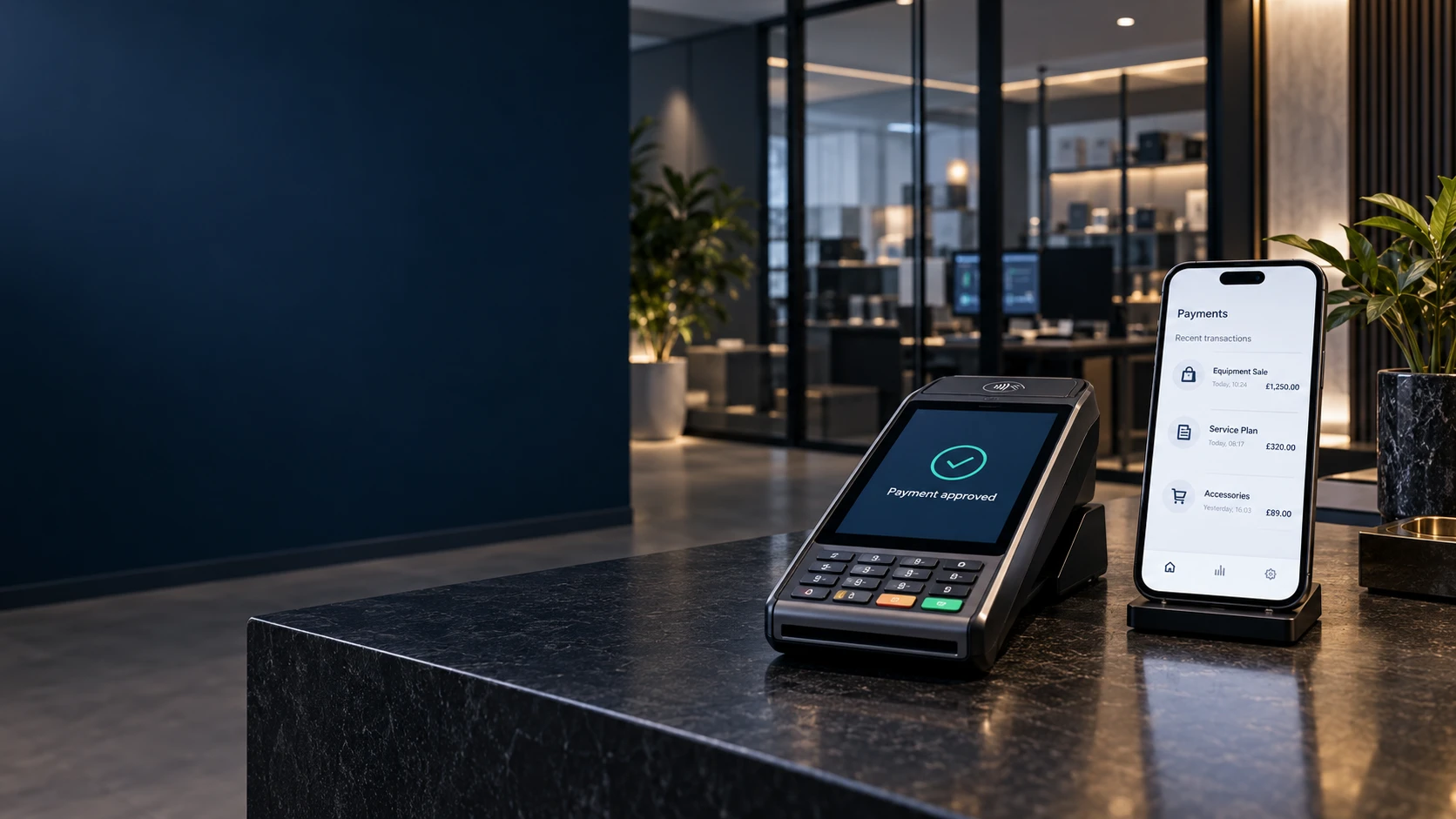
Your payment product starts with the transaction flow
Who is your customer: a consumer, service provider, marketplace or payment-system participant? What do you do, who receives the money and who settles the transaction? These answers determine the business model, permissions and infrastructure.
VM.Capital helps move from a product concept to launch preparation: assess the legal model, select a framework, prepare documents and coordinate engagement with regulators and banks.
Explore All Business SolutionsFour questions that shape the model
Customer and service
Merchant payments, services to system participants, electronic money or technical integration. Define exactly what your customer pays you for.
Money and settlement
Where funds sit at each stage, who can control them and when the merchant is paid. Separately map refunds and incomplete transactions.
Data and participants
How the payer, merchant, bank and technical system interact. Distinguish information exchange, control over funds and final settlement.
Countries and channels
Where customers, banks and partners are located, and which currencies and payment methods are used. Review each country involved in an international product.
Which model applies under Kyrgyz national regulation
Payment organisation
Accepts and executes payments for third-party goods and services within the relevant NBKR licence. Agreements document the arrangements with merchants and the bank.
Payment system operator
Operates the system; licensed activities cover processing and communicating participants’ payment information. This differs from directly accepting payments.
Additional functions
Electronic-money issuance requires an additional licence. Card acquiring needs a separate review of conditions and the combination of permissions. There is no universal licence for all functions.
A technology supplier, agency arrangement, bank product and payment organisation are different models. Developing software or connecting an interface does not itself authorise acceptance of third-party funds; actual operations determine the legal classification.
Assess the model before investing in launch
Start with a short product description and funds flow. We can identify the questions to resolve before incorporation, development and application.
Two frameworks, separate regulatory routes
Kyrgyz national framework
Payment organisations and operators follow National Bank of the Kyrgyz Republic requirements. Select the relevant licences, corporate form and arrangements with banks and participants.
Tamchy SFIT
Payments are among SFIT’s publicly stated financial activities. The SFIT Financial Regulator licenses financial activities. Confirm the proposed product, service scope and authorisation conditions before launch.
SFIT incorporation and status do not replace a financial licence. An SFIT permission cannot automatically be treated as an NBKR permission, or vice versa. For clients and infrastructure outside SFIT, review territorial scope, external-market rules and required approvals.
HTP is not a route to authorising payment operations. A separate software developer is assessed against its activities and regime conditions; its status does not extend to the regulated payment business.
What to establish for a Tamchy payment project
Services and territory
Exact operations, customer categories, currencies and countries. Clarify requirements for cross-border services and connections to external banks and payment systems.
Company and governance
Form, owners, leadership, capital, control functions and operational presence. Requirements depend on the financial activity and authorisation conditions.
Obligations and costs
Reporting, audit, fees, staffing and infrastructure costs. Assess relief within the applicable regime; it does not automatically remove external taxes or social obligations.
SFIT’s general description is not a substitute for product-specific requirements. Review the applicable rules and clarify the authorisation route with the competent regulator before choosing the framework.
Six workstreams for launch preparation
Ownership and leadership
Transparent ownership, capital sources, responsibilities and leadership eligibility. Identify appointments and changes requiring approval.
Documentation and economics
Product description, financial model, system rules and customer and partner agreements. Align fee income, costs and risks with the actual transaction flow.
Technology infrastructure
Transaction processing, access controls, information security, logging, backup and recovery. Distinguish internal responsibilities from those of external suppliers.
Banks and settlement
Accounts, agreements and reconciliation. Define handling of customer and own funds, refunds and balances under applicable rules. Connections also depend on bank decisions.
Internal controls
Customer checks, anti-money-laundering controls, transaction monitoring, fraud prevention and complaints handling. Define accountable staff and response procedures.
Authorisation and readiness
Application package, responses to enquiries and evidence of operational readiness. Technology connections, contracts and permissions should cover the same product.
Launch is the start of ongoing obligations
After launch, maintain accounting, reporting and transaction controls, update documentation and train staff. Assess product, ownership, leadership and infrastructure changes for notification and approval requirements.
Company revenue, customer funds and partner settlements need distinct treatment under applicable rules. Tax consequences follow services, contracts and operating geography, rather than the label “payment company”.
How VM.Capital supports the project
01 · Model assessment
Review the product, participants and funds flow. Identify legal questions, compare applicable frameworks and define the implementation sequence.
02 · Preparation and application
Support agreed incorporation steps, documentation and regulatory engagement. Help align the legal work with the technology team and banking requirements.
03 · Post-launch support
Arrange agreed corporate, accounting and tax support, documentation updates and assistance with product changes.
The regulator decides on authorisation; banks and other partners decide on accounts and connections. VM.Capital supports preparation and the process without guaranteeing approval or decision timelines.
Start with your product
Tell us who the service is for and what it should do. We can help identify a suitable model and the first preparation stage.