
Your next market may be closer than you think
Central Asia comprises five countries with different demand profiles, business practices and operating conditions. Entry requires a choice of country, customer, sales channel and means of performing contracts.
VM.Capital works with regional partners to connect market assessment with practical actions: identifying contacts, reviewing counterparties, structuring the business and supporting launch.
Three reference points
5
Markets
Kazakhstan, Kyrgyzstan, Uzbekistan, Tajikistan and Turkmenistan.
83.6m
People in 2025
Sum of comparable World Bank population figures for the five countries, rounded to 0.1 million.
2 of 5
Countries are EAEU members
Kazakhstan and Kyrgyzstan. The region is not one customs or tax jurisdiction.
Five countries, five entry decisions
On smaller screens, scroll the map horizontally. Country profiles follow below.
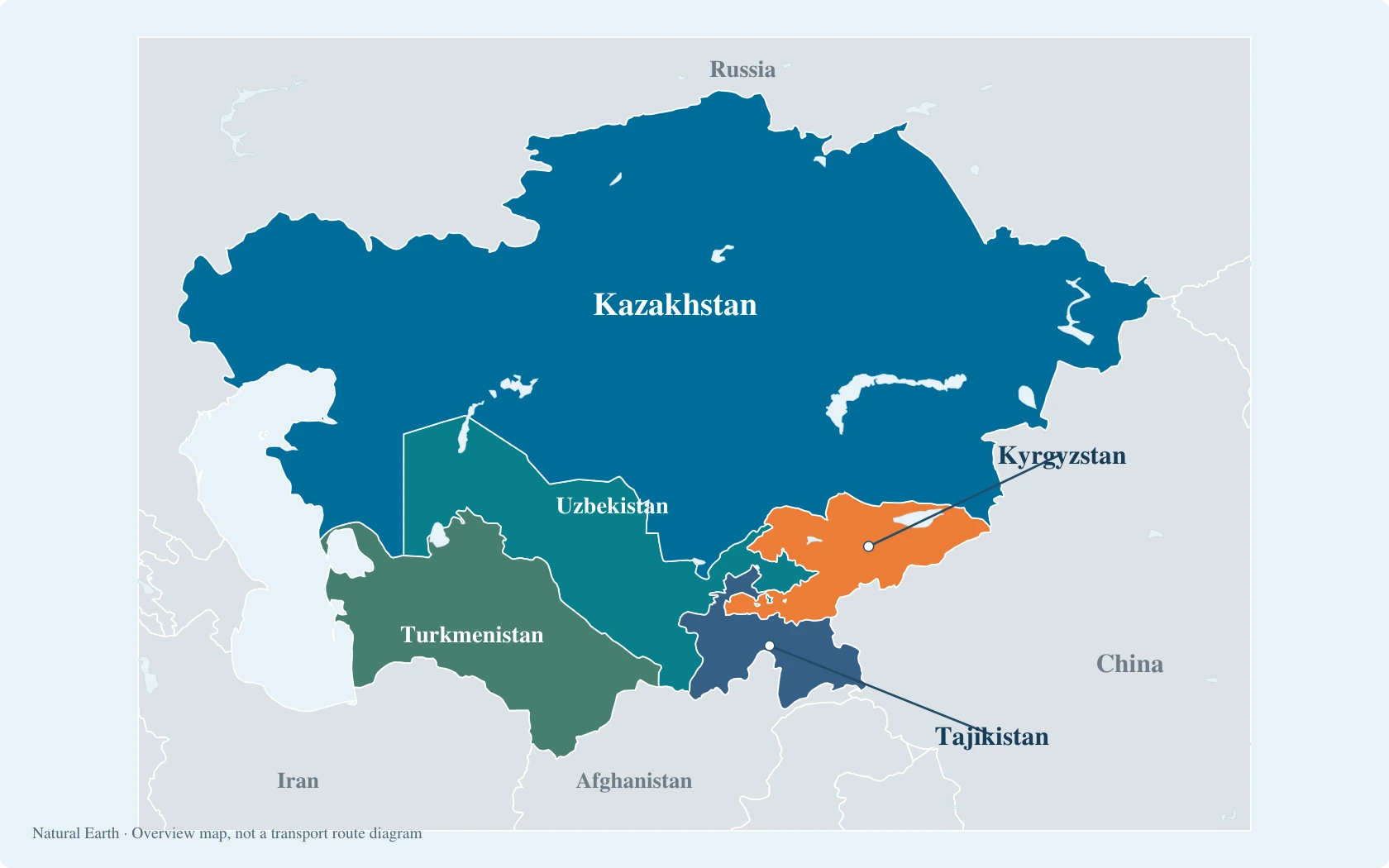
A practical view of each market
Kazakhstan
20.8m people · 2025
A large regional economy with industrial and resource sectors and transport connections. Assess demand from businesses, retail networks and industrial supply chains.
Assess: sales geography, procurement processes and the local partner’s capabilities.
Uzbekistan
37.1m people · 2025
Central Asia’s most populous market with a diversified economy. Consider relevance for consumer goods, equipment, production partnerships and services.
Assess: local sales channels, product requirements and the presence model.
Kyrgyzstan
7.3m people · 2025
An option for regional presence, trading and services. A Kyrgyz company should be assessed alongside sales markets, banking procedures and requirements elsewhere.
Assess: actual company functions, payments and the applicable tax regime.
Tajikistan
10.8m people · 2025
Energy, agriculture and private investment priorities provide directions for assessing supply and project opportunities. Connect the offer with specific buyers.
Assess: the customer, financing, delivery terms and local servicing.
Turkmenistan
7.6m people · 2025
Natural gas has a significant economic role. Assess supply and cooperation opportunities against a specific project, customer and market-access procedure.
Assess: local partners, permissions, contractual and payment terms.
Cities where business relationships take shape
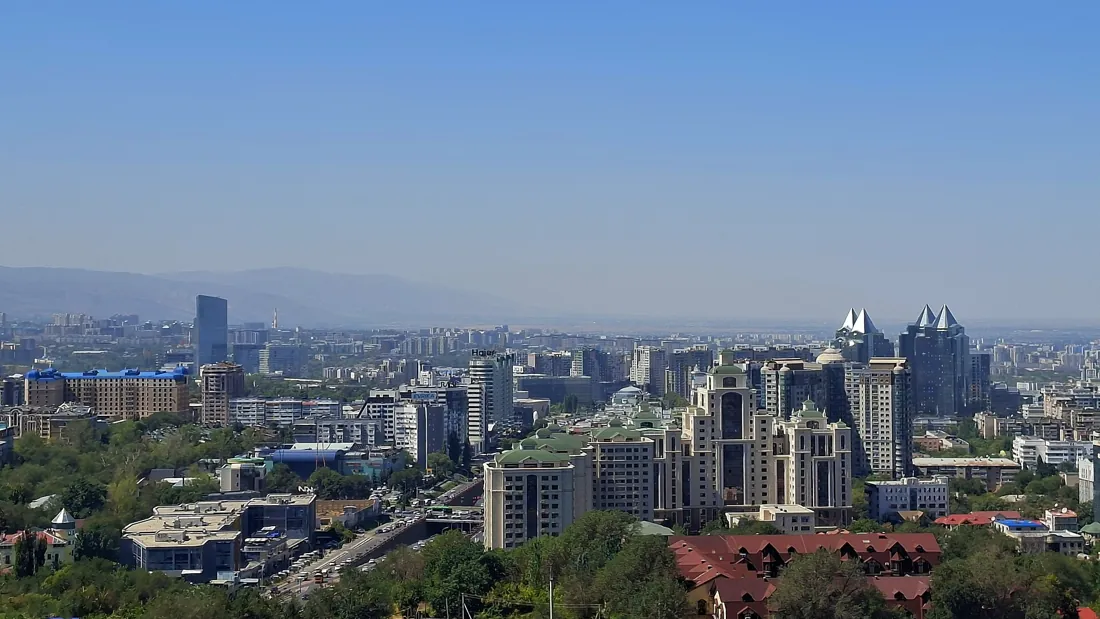
Dauren Nabijan · CC0

Solijonovm1996 · CC BY-SA 4.0
Photos illustrate the urban environment, not VM.Capital offices or partners. Images resized and converted.
Regional partners connect the overview with practical contacts
We involve regional partners in identifying contacts, clarifying local conditions and coordinating interaction. The participants depend on the country, sector and agreed assignment.
- Help identify potential distributors, suppliers and business partners.
- Coordinate initial approaches and meetings within scope.
- Compare candidate claims with available supporting evidence.
- Involve local legal, tax and other specialists where needed.
How we help develop distribution channels
Choose the segment
Identify potential buyers: retail networks, industry customers, dealers, direct accounts or project procurement participants.
Identify candidates
Build a list of potential distributors and partners against agreed criteria: geography, product, customer base and operating profile.
Review capabilities
Assess business reputation and demonstrated experience. Clarify coverage, sales, warehousing and service capabilities.
Define the commercial model
Help discuss territory, pricing, payments, promotion, customer service and reporting responsibilities.
Structure and document
Choose direct sales, distribution, representation, a local entity or a joint project. Coordinate the contractual framework.
Support initial operations
Align contracts with payments, delivery and local requirements. Recommend refinements after initial transactions.
Find your starting point in the region
Outline the product or service, intended buyers and countries of interest. We will propose an appropriate scope of assessment and practical work.
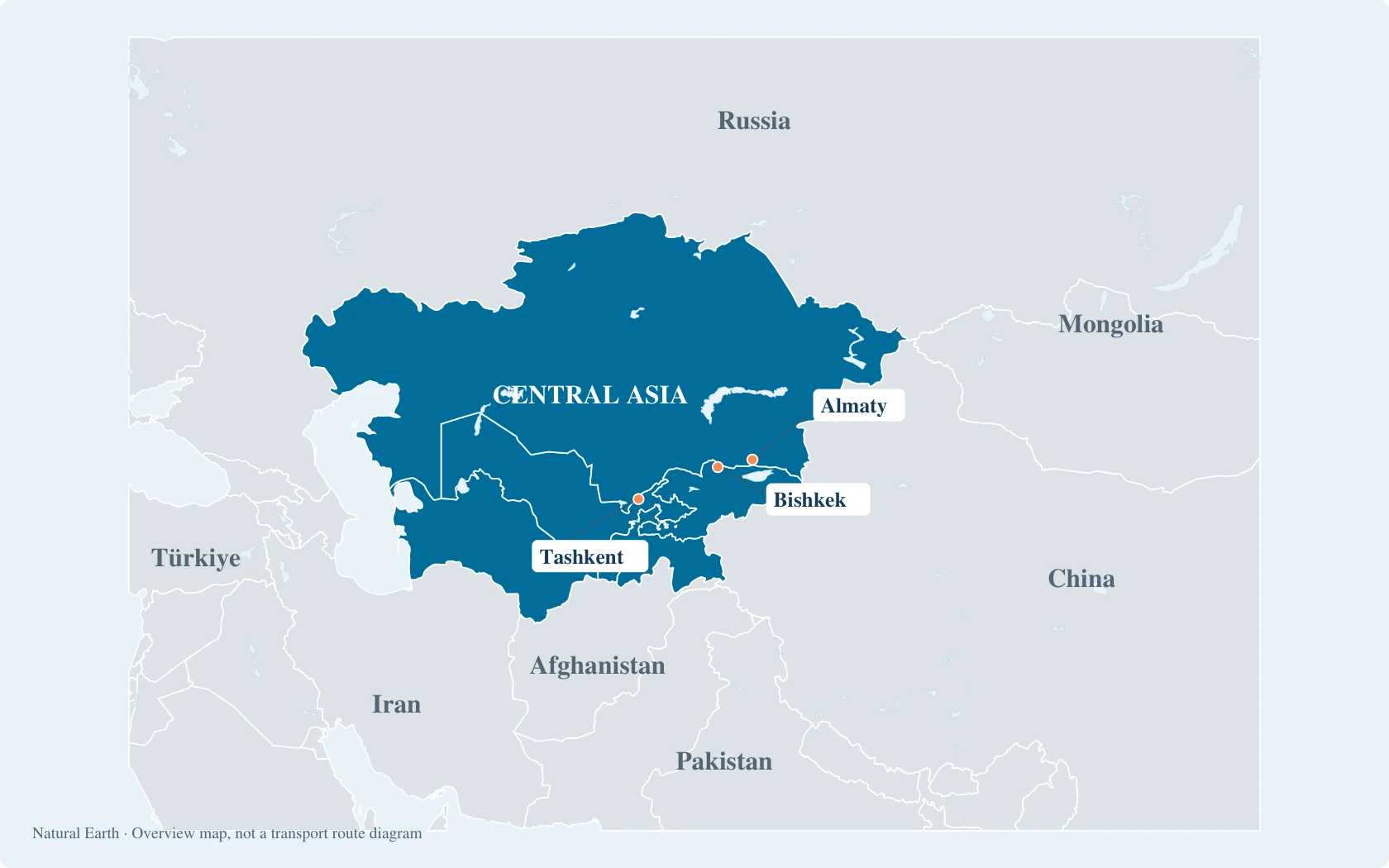
Central Asia alongside neighbouring markets
Regional connections matter for suppliers and routes. A World Bank report dated 28 September 2026 examines the Trans-Caspian Transport Corridor as an opportunity to strengthen trade and private investment. The route, cost, timing and formalities of a particular shipment require separate assessment.
On smaller screens, scroll the map horizontally.
The business structure should support sales
Where functions sit
Define head-office and local-company functions, the distributor’s role and whether local presence is required.
How goods and payments move
Align supply, contractual obligations, settlement and records. Assess relevant tax and customs questions.
Who is responsible
Document partner obligations, oversight, customer service and termination arrangements.
From initial interest to launch
Assess the markets
Identify countries, segments, competitors, requirements and questions for further verification.
Find and review contacts
Build a candidate list, coordinate approaches and assess cooperation possibilities.
Agree on the model
Select presence, sales and payment arrangements, documentation and required actions.
Organise launch
Prepare agreed corporate and contractual steps, support initial operations and ongoing activity.
Market entry questions
Do I need to incorporate immediately?
No. You may start with demand assessment, partner search or direct sales where permitted. The operating model determines whether a local entity is needed.
Can a Kyrgyz company serve the region?
That option can be assessed. It does not remove destination-country requirements: product documentation, tax, local approvals and banking conditions need review for the relevant operations.
Do you provide a ready-made distributor?
We help identify and assess candidates, coordinate discussions and negotiate arrangements. Selection depends on interest and review findings; contract conclusion and sales volumes are not guaranteed.
Can I start with one country?
Yes. Select an initial market, test the model and then consider expansion. Scope and regional partner involvement are agreed in advance.
Services to implement the approach
Market Entry & Expansion
Assessment, partner identification and launch planning.
Learn more →International Business Structuring
Corporate, contractual and tax arrangements for operations.
Learn more →Comprehensive Due Diligence
Review companies, assets and material risks before cooperation.
Learn more →Start with the right market and a clear plan
Outline your offer and the customers you seek. We will help identify the next step.
Review and image sources
Checked on 16 October 2026. Population uses comparable World Bank data for 2025. Country profiles and assessment directions do not replace product-specific demand research.